
How Far Can Your Car Really Go? Decoding Vehicle Lifespan
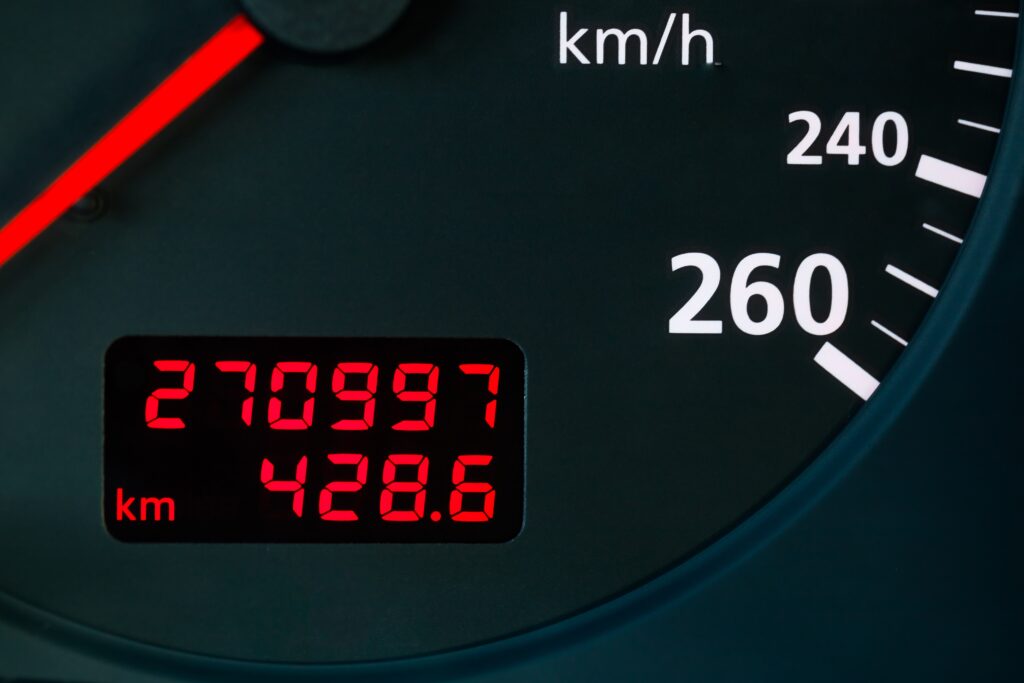
When purchasing a pre-owned vehicle, the single most critical variable governing your long-term return on investment is its remaining mechanical lifecycle. Buyers frequently ask: How many miles can a used car actually last before it becomes financially impractical to maintain?
The truth is that there is no universal, one-size-fits-all odometer ceiling. A vehicle’s true operational lifespan is determined by a complex combination of factory build quality, localized climate stresses, the previous owner’s maintenance discipline, and your personal daily driving style.
For drivers across Tallahassee, Leon County, and North Florida, understanding the mechanics of vehicle longevity is vital. Whether you are commuting daily along the Apalachee Parkway, racking up high highway miles on I-10, or navigating university traffic around FSU and FAMU, you need a car engineered to go the distance.
At Ultimate Image Auto, we eliminate the gamble from used car shopping. Every pre-owned vehicle on our Capital Circle SE lot undergoes a strict mechanical safety inspection to ensure its structural infrastructure is fully prepared for the long haul. In this definitive guide, we will break down the true longevity averages by vehicle class and manufacturer, analyze the severe mechanical damage caused by driving on an empty fuel tank, and provide an actionable preventative maintenance strategy to help your vehicle surpass the legendary 250,000-mile mark.
Average Lifespan Expectations by Vehicle Class
Vehicle architecture and weight distribution heavily influence how components fatigue over time. While individual build quality varies, different vehicle segments display distinct operational lifecycles under standard driving conditions:
Compact and Midsize Sedans (The Endurance Champions)
- Average Longevity Range: 200,000 to 300,000 Miles
- Mechanical Profile: Sedans generally represent the most durable long-term investments. Because they possess a low center of gravity and lightweight chassis construction, their suspension assemblies, wheel bearings, and braking components experience significantly lower physical stress compared to heavy utility vehicles. Base-level four-cylinder engines are highly optimized for linear performance, running at cooler operating temperatures and racking up incredible lifecycles with minimal intervention.
The Physics of Short Trips vs. Highway Commuting
How a sedan accumulates its mileage alters its structural wear patterns dramatically. Frequent short trips under five miles—such as quick campus drives across FSU or short grocery runs—are classified by auto manufacturers as severe driving conditions. During short trips, the engine’s motor oil never reaches its optimal operating temperature (~212°F). As a result, moisture and raw combustion blow-by vapors fail to evaporate from the crankcase. This moisture mixes with the engine oil, forming an acidic, jelly-like oil sludge that blocks vital lubrication passages and causes premature engine failure.
In contrast, sustained highway driving allows the engine to run at peak efficiency, keeping the oil clean and keeping battery charging systems perfectly optimized, allowing vehicles to effortlessly hit high odometers.
Crossovers and Compact SUVs (The Versatile Workhorses)
- Average Longevity Range: 175,000 to 225,000 Miles
- Mechanical Profile: Built on car-based unibody platforms but carrying extra weight and riding on taller suspensions, crossovers balance utility with reliable longevity. Their electronic all-wheel-drive (AWD) coupling units and advanced multi-link suspensions require tighter fluid monitoring schedules, but their primary engine and transmission blocks are highly resilient.
Full-Size SUVs and Half-Ton Pickups (The Heavy-Duty Haulers)
- Average Longevity Range: 150,000 to 200,000 Miles
- Mechanical Profile: While full-size trucks feature heavy, robust body-on-frame engineering, their daily operating conditions often accelerate fatigue. Towing heavy payloads through North Florida’s humid heat creates massive thermal stress inside the transmission, differential gearing, and torque converters. However, if these heavy fluid systems are meticulously maintained, their large-displacement naturally aspirated engines can easily push past these baseline averages.
Manufacturer Longevity Profiles: Market Reality Matrix
To help guide your vehicle selection before visiting our showroom, review our comprehensive automotive longevity index based on historical tracking reports from Consumer Reports and the IIHS:
| Vehicle Brand | Expected Mileage Target | Baseline Engineering Advantages | Primary Longevity Bottleneck | Target Maintenance Focus |
| Toyota / Lexus | 250,000 – 300,000+ | Naturally aspirated simplicity; Over-engineered cooling systems | Alternator and minor rubber component age | 5,000-mile oil fluid flushes |
| Honda / Acura | 200,000 – 275,000 | ACE structural safety cages; Highly durable i-VTEC valvetrains | Early CVT fluid sensitivities | 30,000-mile transmission service |
| Subaru | 185,000 – 225,000 | Symmetrical AWD stability; Boxer engine low center of gravity | Head gasket wear on historic models | Cooling system flush monitor |
| Ford / Chevy / GMC | 150,000 – 200,000 | Heavy body-on-frame trucks; Simple pushrod engine blocks | Complex electronic interior components | Transmission fluid service |
| BMW / Audi / VW | 130,000 – 175,000 | Sophisticated driving dynamics; Precision high-pressure turbos | Severe plastic degradation under high heat | Preventative water pump change |
The High Danger of Driving on Empty
Driving your vehicle until the fuel warning light illuminates does more than cause roadside anxiety; it inflicts severe, irreversible damage to your fuel delivery system, culminating in premature fuel pump burnout and catalytic converter damage.
[Driving on a Full Tank]  ──► Fuel Pump Submerged ──► Kept Cool & Lubricated ──► Long Lifecycle

[Driving on an Empty Tank] ──► Pump Exposed to Air  ──► Overheats & Sucks Sludge ──► Premature Pump Burnout
The Thermodynamics of Electric Fuel Pumps
Many Tallahassee drivers don’t realize that modern electric fuel pumps reside directly inside the vehicle’s gas tank. The pump relies entirely on being completely submerged in cold liquid gasoline to act as a cooling mechanism and internal lubricant.
When you consistently drive with a low fuel level—specifically when your tank drops below one-quarter full (roughly 30 to 50 miles of remaining range)—the fuel pump becomes exposed to the air. Without a surrounding liquid buffer to dissipate the immense thermal energy generated by its electric motor, the pump quickly overheats, causing its internal bearings to warp, seize, and fail.
The Downstream Destruction: Misfires and Catalytic Converter Failure
The mechanical damage of driving on empty does not stop at a dead fuel pump. When the pump draws up air bubbles or struggles to pull fuel through a clogged intake screen, the fuel rail pressure drops instantly. This drop in pressure prevents the fuel injectors from spraying a fine, atomized mist into the combustion chambers, resulting in a dangerously “lean” fuel-to-air ratio.
A lean fuel mixture causes severe engine misfires. When an engine misfires, unburned raw gasoline escapes the combustion chamber and travels directly down the exhaust system into your catalytic converter.
Because a catalytic converter operates at extreme temperatures (~1,200°F to 1,600°F), this raw, liquid fuel immediately ignites on contact with the internal precious-metal honeycomb substrate. The resulting chemical explosion melts the internal ceramic structure, completely choking your exhaust flow, triggering a flashing “Check Engine” light, and turning a simple low-fuel habit into a catastrophic $2,500 repair layout that can instantly total an older vehicle.
Debris Ingestion and Cavitation Risks
Over years of gas station fill-ups, heavy sediment, microscopic rust flakes, and mineral contaminants naturally settle at the absolute bottom of your fuel tank. When you run your car close to empty, the fuel pump is forced to draw from this concentrated layer of sludge. This clogs the internal filtration screen, restricting fuel flow and forcing the pump motor to strain excessively to maintain systemic fuel rail pressure.
Furthermore, as gasoline sloshes away from the pickup tube during cornering or hard braking, air bubbles enter the fuel lines. This causes a phenomenon known as cavitation—microscopic air bubble implosions that physically pit and destroy the internal steel impellers of your fuel pump, resulting in a sudden, expensive $800 repair bill.
🛑 Quality Inspection Assurance
Safety and durability first. Every single vehicle on our lot undergoes a strict multi-point mechanical inspection to guarantee maximum longevity. Shop Durable Cars and Trucks
The 4 Foundations of Preventative Vehicle Longevity
If you want your pre-owned vehicle to remain highly efficient and completely reliable for over a decade, you must execute a disciplined preventative maintenance routine. Follow this precise chronological sequence to maximize your vehicle’s lifespan:
1.Execute precision oil and filtration changes:Every 5,000 Miles.
Never delay an oil change. Over time, engine oil shears down thermally, losing its vital viscosity and accumulating acidic blow-by contaminants. Swapping your engine oil and filter at regular intervals ensures your internal pistons, camshafts, and cylinder walls remain shielded by an optimal, low-friction lubrication boundary layer.
2.Perform systemic transmission and cooling fluid flushes:Every 30,000 Miles.
Automotive fluids lose their specialized protective additive packages over time. Flushing your automatic transmission fluid removes microscopic friction debris, while replacing your engine coolant maintains your system’s anti-corrosive pH balance—vital for protecting water pumps and aluminum radiators from internal scaling.
3.Execute critical timing belt and spark plug swaps:Every 90,000 Miles.
For vehicles equipped with an interference engine, a snapped timing belt causes immediate, catastrophic piston-to-valve collisions that destroy the entire engine block. Replace your timing belt, water pump, and advanced iridium spark plugs at this major milestone to guarantee structural operational security.
4.Conduct proactive fluid level and tire inflation audits:Every 2 Weeks.
Take five minutes to pop your hood twice a month. Check the engine oil dipstick, inspect the coolant reservoir level, and verify your tire inflation pressure when cold. Maintaining correct tire psi prevents uneven wear patterns and reduces physical rolling resistance, minimizing strain on your transmission and suspension components.
Cashing In Before Major Component Fatigue
While exceptional maintenance can keep a car running indefinitely, there comes a logical point in every vehicle’s lifecycle where the cost of upcoming repairs exceeds the actual cash value of the vehicle. If your current car is approaching 150,000 miles and requires a new transmission, a catalytic converter replacement, or extensive steering rack repairs, you are throwing good capital after bad.
The most financially sound decision is to perform a strategic trade-in before your car suffers an absolute mechanical failure. At Ultimate Image Auto, we accept vehicles in any condition—whether it runs perfectly or you have to literally push, pull, or drag it onto our lot.
Trading your car lets you apply its remaining equity directly as a down payment toward a highly reliable, 5-year-old vehicle that fits your budget and comes backed by a comprehensive warranty. To learn our insider detailing tips to maximize your vehicle’s appraisal value before visiting our lot, read our comprehensive master guide on getting the best trade-in price.
Visit Ultimate Image Auto in Tallahassee
Do not let the fear of unexpected breakdowns or mechanical fatigue compromise your daily peace of mind. At Ultimate Image Auto, we are dedicated to providing our Leon County neighbors with an inventory consisting exclusively of high-integrity, highly durable used cars, trucks, and SUVs built to withstand the test of time. Our experienced sales and financing professionals will walk you through service records, structural safety scores, and fluid history files so you can make your next investment with complete clarity. Experience our customer-first dedication on Capital Circle SE today!
Browse Our Quality Pre-Owned Cars, Trucks, & SUVs: Search Our Inventory
Get Pre-Approved Online in Minutes: Apply for Credit
Dealer Location: 1177 Capital Circle SE, Tallahassee, FL 32301
Phone Number: 850-877-7222