
10 Things Every Florida Buyer Should Know Before Getting a Used Car
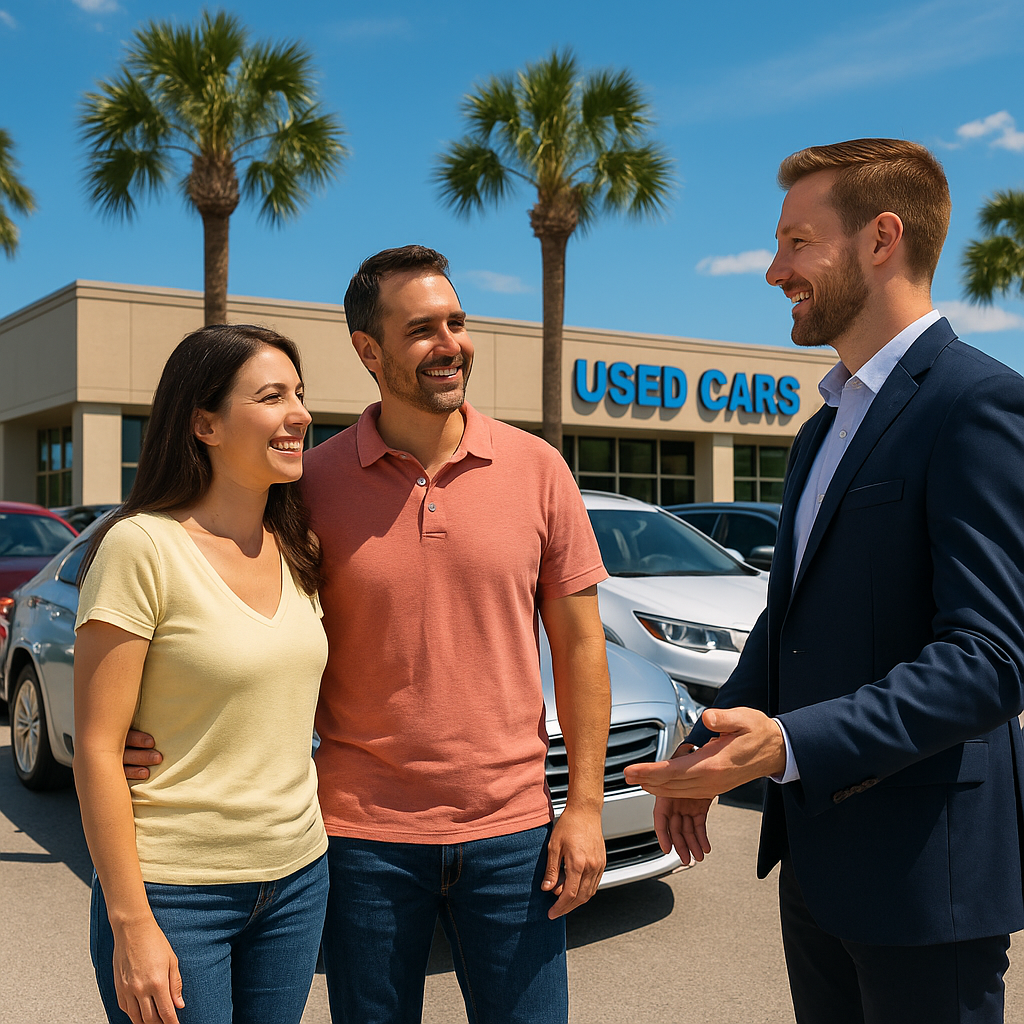
Shopping for a pre-owned vehicle in the Sunshine State is an incredibly smart way to secure dependable transportation without absorbing the severe financial blow of new-car depreciation. However, the Florida used car market operates under a highly specific framework of tropical climate challenges, rigorous local consumer laws, and strict state registration requirements.
Whether you are an FSU, FAMU, or TCC student looking for a reliable campus commuter, a professional navigating daily traffic on I-10, or a retiree settling in Leon County, entering a vehicle purchase blindly is a major financial risk. From structural saltwater corrosion to the legal traps of private vehicle sales, knowing what to look for can protect your wallet and your peace of mind.
At Ultimate Image Auto, we advocate for complete buyer education. Every pre-owned car, truck, and SUV on our Capital Circle SE lot undergoes a rigorous multi-point mechanical safety inspection and comes backed by a complimentary powertrain warranty, giving you complete peace of mind. In this comprehensive guide, we will outline the top ten things you must know before buying a used car in Florida.
1. Check the Vehicle History Report for Environmental Damage
A comprehensive vehicle history report is your first line of defense. When shopping for a used car in Florida, use services like CARFAX or AutoCheck to specifically audit the vehicle for structural flood history, saltwater damage, odometer discrepancies, and prior title branding.
Because Florida experiences heavy tropical storms, localized coastal flooding, and severe hurricane seasons, thousands of flood-damaged vehicles enter the pre-owned market every year. Flood-damaged cars are frequently detailed to look brand new, but their complex electrical systems, airbag modules, and computer networks will inevitably corrode and fail months after the purchase.
When reviewing the history report, check where the vehicle spent its life. If it was registered in low-lying, flood-prone coastal areas during a major storm event, pay extreme attention to the mechanical inspection. Look for indicators of structural water damage such as musty interior cabin smells, rusted seat mounting brackets, or white corrosion on under-dash electrical connections.
2. Verify the Title Is Clean and in the Seller’s Name
You should never hand over money to a seller who does not possess a physical, clean Florida title in their exact legal name. A clean title certifies that the vehicle is free of destructive branding (such as salvage, rebuilt, or water damage) and has no active, unresolved financial liens.
Understanding Florida’s Strict Title Laws
Florida law is highly specific regarding the physical transfer of vehicle ownership. One of the most common private-seller scams in our state is title jumping (or tax jumping), where an unlicensed seller buys a car, intentionally fails to register the title in their own name to avoid state sales tax, and then attempts to flip it to you.
When you go to the Leon County Tax Collector’s office to register the vehicle, you will be rejected because the seller’s signature does not match the name printed on the front of the title. Always verify the seller’s physical driver’s license matches the name on the front of the title before signing any paperwork. If they claim they are selling it for their cousin or friend, walk away immediately.
3. Understand Florida’s Lemon Law (and Its Used Car Limits)
While Florida has robust consumer protection laws, the state’s Lemon Law applies exclusively to new or demonstrator vehicles. Used cars are almost always sold “As-Is,” meaning the buyer assumes all financial and mechanical responsibility the moment the bill of sale is signed.
Because there is no automatic “cooling-off” period or state-mandated used-car lemon protection, buying from an unverified private seller is a major gamble. If the engine fails five minutes after you drive away, you have zero legal recourse.
This is why reputable local dealerships like Ultimate Image Auto do not sell vehicles “As-Is.” We protect our local drivers by providing a standard 3-month/3,000-mile warranty on our pre-owned models, giving you a physical mechanical safety net that private sellers simply cannot replicate.
4. Get a Professional Pre-Purchase Inspection (PPI)
An independent pre-purchase inspection (PPI) is the ultimate diagnostic tool for any used vehicle. You should always arrange for a certified, third-party mechanic to elevate the car on a lift and inspect its suspension, structural frame, engine compression, and active computer codes before finalizing your purchase.
A visual appraisal of a car’s exterior paint is never enough. Florida’s high humidity and intense coastal salt air accelerate undercarriage corrosion and cause rubber suspension bushings to dry-rot and crack prematurely.
A certified mechanic will plug a diagnostic scanner into the OBD-II port to read any pending trouble codes that a dishonest seller may have cleared right before you arrived, revealing underlying engine, transmission, or catalytic converter failures. Spending $150 on an inspection can easily save you $5,000 in unexpected engine repairs.
5. Check the NHTSA Database for Outstanding Safety Recalls
Millions of vehicles are currently operating on Florida highways with critical, unaddressed manufacturer safety recalls. Before you agree to purchase any pre-owned vehicle, enter its 17-digit Vehicle Identification Number (VIN) into the official National Highway Traffic Safety Administration (NHTSA) database.
Common outstanding recalls range from highly dangerous exploding Takata airbag inflators to electronic brake system fires and steering column failures.
By utilizing the NHTSA Safety Recall Search Tool, you can instantly see if a vehicle has any open safety campaigns. If recalls are active, the selling party should have them resolved at an authorized manufacturer dealership—at zero cost to you—prior to completing the transaction.
6. Budget for Florida Sales Tax, Title, and Registration Fees
When calculating the out-the-door cost of your used car, you must budget for Florida’s state sales tax (6% of the purchase price, plus any county-specific surtaxes) and the administrative costs of title transfer, new license plates, and annual registration.
If you purchase a used vehicle from a licensed Florida dealership, they are legally required to calculate, collect, and process these taxes and registration fees for you, issuing a temporary paper license plate so you can drive home legally.
If you choose a private sale, you must physically visit your local county tax collector’s office with the signed title, proof of active insurance, and HSMV Form 82050 to pay your sales tax and complete the registration transfer out of pocket. Failing to budget for these extra fees can result in severe cash flow issues on delivery day.
7. Recognize and Avoid “Curbstoning” Scams
Curbstoning is an illegal practice where unlicensed automotive dealers pose as private sellers on public streets, parking lots, or online classifieds. These scammers repeatedly flip salvage, flooded, or structurally compromised vehicles to unsuspecting buyers to bypass state dealer licensing laws.
Curbstoners often use disposable phone numbers, refuse to meet at a residential address, and insist on cash-only transactions. They will frequently tell you they are “selling the car for a family member” who is conveniently unavailable.
If you see the same phone number associated with multiple vehicle listings online, or if the seller’s name is missing from the title, walk away immediately. Purchasing a vehicle from a curbstoner leaves you with zero consumer protection and a high likelihood of registering a dangerous, structurally damaged car.
8. Understand Florida’s Minimum Auto Insurance Requirements
Before you can legally register a vehicle or obtain a license plate in the state of Florida, you must present physical proof of active auto insurance. The state enforces strict minimum coverage mandates that must be maintained on all registered vehicles.
Under Florida’s motor vehicle laws, you must carry a minimum of:
- $10,000 in Personal Injury Protection (PIP): Covers medical expenses for you and your passengers regardless of who caused the accident.
- $10,000 in Property Damage Liability (PDL): Covers physical damage you cause to another person’s vehicle or property.
Because Florida is a “no-fault” state, these basic coverages do not cover damage to your own vehicle. If you are financing your used car, your lender will legally require you to carry “full coverage” insurance, which includes comprehensive and collision policies with specific deductible limits.
9. Test Drive the Vehicle Across Varying Driving Conditions
You should never purchase a used vehicle without a rigorous, multi-speed test drive. A proper test drive evaluates engine thermal management, transmission shifting smoothness, steering alignment, and braking stability under real-world Florida driving conditions.
When test-driving a pre-owned vehicle, turn off the radio so you can listen closely to the mechanical operation of the car. Accelerate hard onto a local highway like I-10 to ensure the transmission shifts smoothly without slipping or gear hesitation.
Brake firmly from 45 mph on a flat road to check for steering wheel vibrations, which indicate warped brake rotors. Finally, turn the air conditioning system to its maximum setting; the vents should blow cold air (below 45°F) within three minutes, which is vital for surviving our Leon County summers.
10. Weigh the Safety and Protections of a Dealership vs. Private Sale
While private sales can occasionally offer lower initial asking prices, they carry maximum financial risk and zero buyer protection.
Purchasing from a licensed, reputable used car dealership in Tallahassee provides a structured, highly regulated buying environment:
- Inspected Quality: Every vehicle undergoes a safety and mechanical diagnostic inspection.
- Financing Flexibility: Dealers work with networks of local banks and credit unions to secure competitive interest rates for all credit types.
- Legal Protections: Dealerships are strictly regulated by the Florida Department of Highway Safety and Motor Vehicles (FLHSMV), protecting you from title fraud, undisclosed salvage brands, and curbstoning scams.
Essential Inspections for Florida Used Cars
Before you finalize your purchase, run through this standard maintenance inspection sequence to ensure the vehicle is optimized for Florida’s climate:
1.Examine the undercarriage and engine bay:Step 1: Check for Saltwater Rust.
Many vehicles in Florida are driven near coastal beaches where salty sea air accelerates metal corrosion. Look closely at the suspension mounting points, exhaust brackets, and engine block bolts for white oxidation or structural rust.
2.Search for hidden moisture indicators:Step 2: Inspect for Flood Damage.
Florida’s intense tropical storms and hurricanes can result in flooded vehicles entering the used market. Pull the seatbelts all the way out to check for water lines, look for rust on the metal seat tracks, and smell the carpet closely for musty mildew odors.
3.Verify the air conditioning and engine cooling:Step 3: Test the Cooling System.
Our summer temperatures exceed 95°F regularly. Hook up a diagnostic scanner to monitor the engine coolant temperature at idle, and ensure the air conditioning blows ice-cold air (below 45°F at the vents) within three minutes of starting.
4.Analyze the electrical charging system:Step 4: Check the Battery and Alternator.
Extreme heat is the number one killer of car batteries in Florida. Have a technician perform a load test on the battery to ensure it holds a full charge and confirm the alternator output is between 13.5 and 14.5 volts.
Protect Your Investment: Beat Depreciation
Buying a used vehicle is an incredibly smart financial decision because the original owner took the brunt of the immediate depreciation hit. However, to keep your cost of ownership as low as possible and secure maximum return when it is time to upgrade, you must keep your vehicle’s physical and mechanical condition in top shape.
To learn how to maintain your vehicle’s cosmetic paint finish and maximize your vehicle’s future trade value, read our comprehensive guide on getting the best trade-in price.
Visit Ultimate Image Auto in Tallahassee
Why deal with the stress, safety hazards, and title risks of buying from unverified private sellers? At Ultimate Image Auto, our dedicated team of technicians carefully evaluates every pre-owned vehicle to ensure it meets our strict criteria for safety, mechanical reliability, and overall performance. Drive home with complete peace of mind today!
Browse Our Quality Pre-Owned Cars, Trucks, & SUVs: Search Our Inventory
Get Pre-Approved Online in Minutes: Apply for Credit
Dealer Location: 1177 Capital Circle SE, Tallahassee, FL 32301
Phone Number: 850-877-7222